
Q&A with Chris Hines: Waves & Love as an example of Intelligent Activism
Surfers Against Sewage co-founder Chris Hines on Intelligent Activism, voluntourism, slow travel and his honest take on Waves & Love.
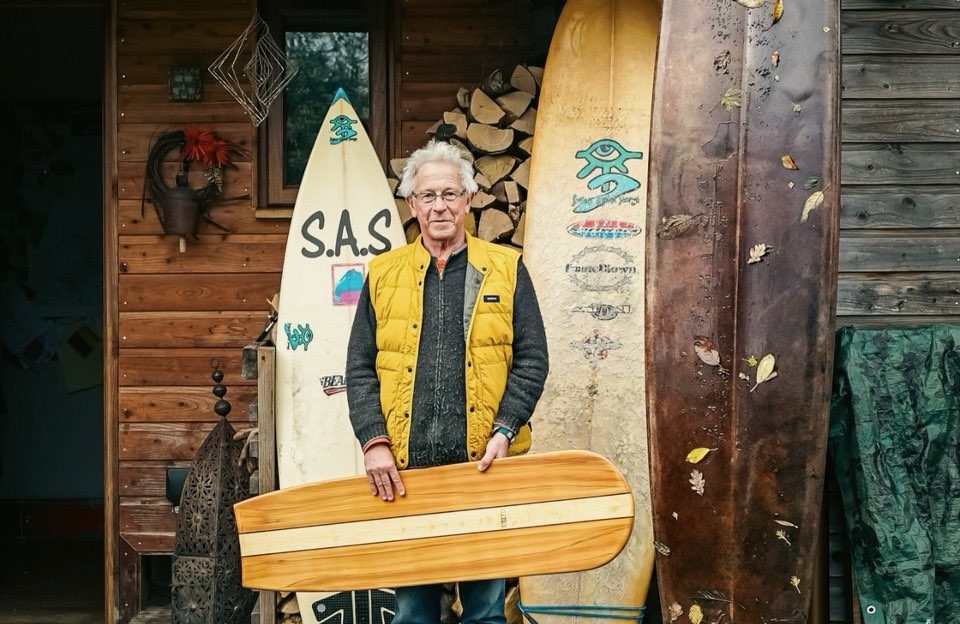
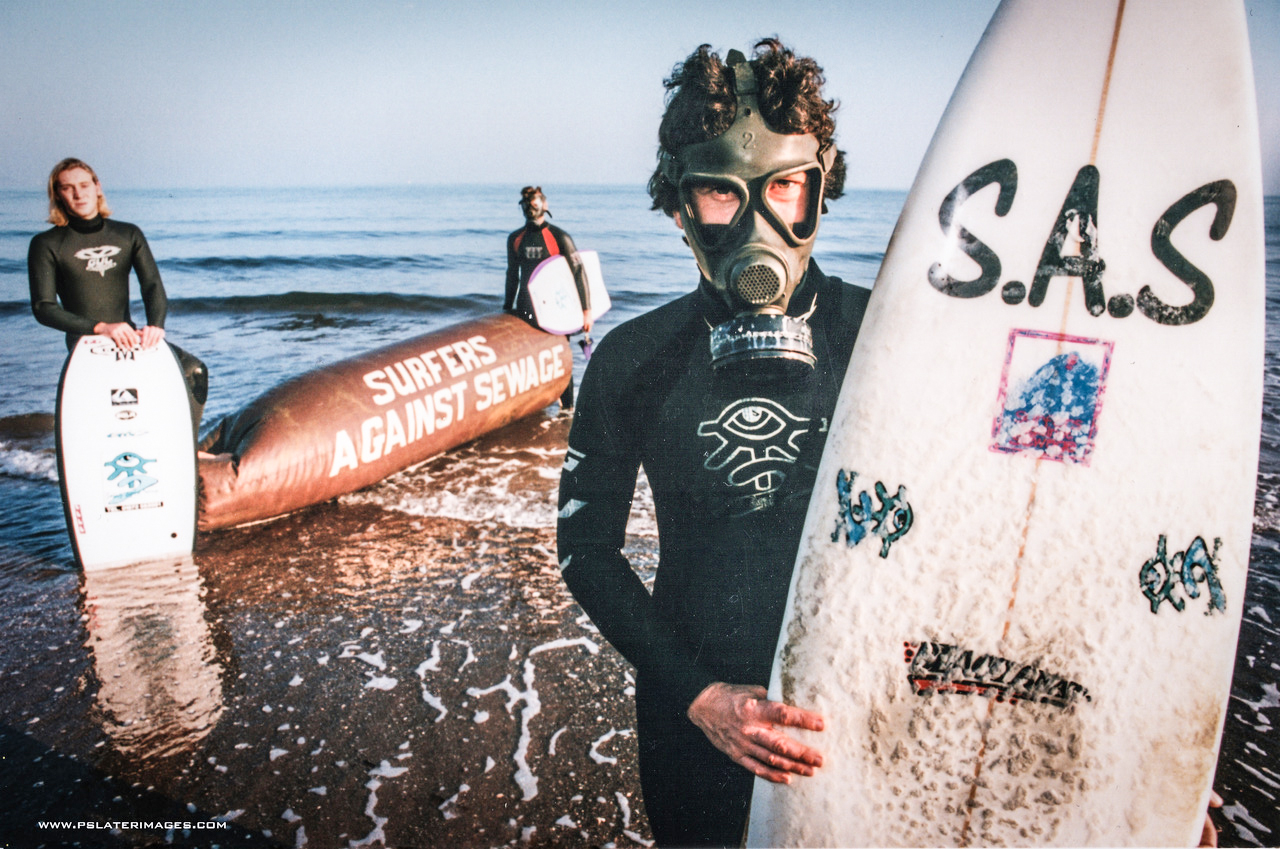
St Agnes, Cornwall, 1990. Surfers from this village and neighbouring Porthtowan kept paddling out through raw sewage. When they asked the authorities what was being done about it, the answer was: nothing, the beach is fine. So they called a meeting in the church hall, and Surfers Against Sewage was born.
Chris Hines was one of them. He led the group's campaigns for its first ten years, became the first sustainability director of the Eden Project, and was made an MBE in 2008 for services to the environment. Today he calls his method Intelligent Activism.
We first met Chris at the Surf Talks of the Norte Surf Festival in Porto. For the first episode of our Q&A series, Thomas Vesper, founder of Waves & Love, asked him how a group of surfers took on a whole industry, what Intelligent Activism really means, and what he honestly thinks of Waves & Love. The conversation was recorded on 1 October 2026 and edited for length and clarity.
Chris Hines at a glance
Known for: co-founding Surfers Against Sewage in 1990 and leading its campaigns until 2000.
Impact: his campaigns helped secure a £5.5 billion clean-up of the UK coastline.
After SAS: first sustainability director of the Eden Project (2001 to 2007), MBE in 2008.
On screen: played by Tom Durant-Pritchard in Dirty Business, Channel 4's 2026 docudrama about the UK sewage scandal.
Today: runs the sustainability consultancy A Grain of Sand and gives talks on Intelligent Activism.
“We realised that if we didn't do something, who was going to?”
— Chris Hines
How did Surfers Against Sewage start?
Thomas: Take us back to 1990. What was the moment you thought: someone has to do something, and it might as well be us?
Chris: It was yet another year, yet another session of going surfing with pantyliners, tampons and condoms in the water. People were getting ill, so we asked the authorities, the people in charge, what they were doing about it. And they said nothing. They went: the beach is all fine.
All too often in life, we look around and think someone else has sorted it. But it became clear that no one else was going to sort it. We were being told our beach was okay, while we were literally getting pantyliners stuck in our hair. That was the moment of clarity.
So we called a little meeting. About a dozen people turned up, and we said: okay, if we're serious, we'll go forwards. We called a public meeting two weeks later, and then we were off. Very naive, just driven by the feeling that our world wasn't right and we needed to step up.
Thomas knows the feeling: surfing at Yoff beach in Dakar a few months before this interview, he came out of the water covered in plastic bags. Surfrider Foundation Sénégal is fighting that battle today.
Thomas: After all these years, what are you proudest of, and what would you have done differently?
Chris: The proudest bit is a collective one: all of us who started SAS would be very proud that it is still going. It's a bit sad that it still has to exist. The reality is it will probably always need to. But for something that was just a little idea to still be going 36 years later says something about its spirit.
Then there's the massive clean-up of our coastal waters that we helped deliver. It went from 400 million gallons of completely crude sewage every day to everything receiving at least secondary treatment, with tertiary treatment for about 14 out of 20 million people. And it was the surfing community that headed that up.
Someone told me recently: you were a good captain. I thought that was a really nice way of summarising it, because everything's a team effort, and the captain isn't necessarily the navigator.
What would I have done differently? I think we did a pretty good job. But I would have taken a longboard with me. I used to try and surf some ridiculous places around Britain on my shortboard. With a mini mal, I would have had waves in those places. That's the first time I've ever said that to anybody.
What is Intelligent Activism?
Thomas: How would you define Intelligent Activism to someone who has never heard of it?
Chris: A lot of people think of activism as just shouting, waving a placard and protesting. That's step one. Intelligent activism is using all the tools that are used to create this mad, crazy version of the world in which we live, to deliver our story, our version of that world.
Yes, you need to protest, but you also need to use science. We had our blood tested: surfers were three times more likely to contract hepatitis A than the general public. Then engineering, politics, shareholder action, media: all those different things create multifaceted pressure points to drive change forwards. Simply protesting is important, but it only gets you the attention to then deliver all of those other bits.
The Intelligent Activism toolkit
Protest, to get attention.
Science, to prove the problem: blood tests showed the health risk for surfers.
Engineering, to show the solution: proper sewage treatment works.
Politics, to change the rules: Chris gave evidence to a government select committee on sewage in 1997.
Shareholder action, to put pressure on the water companies from the inside.
Media, to tell the story: surfing's image helped sell the idea that “clean seas are good”.
Is Waves & Love a form of Intelligent Activism?
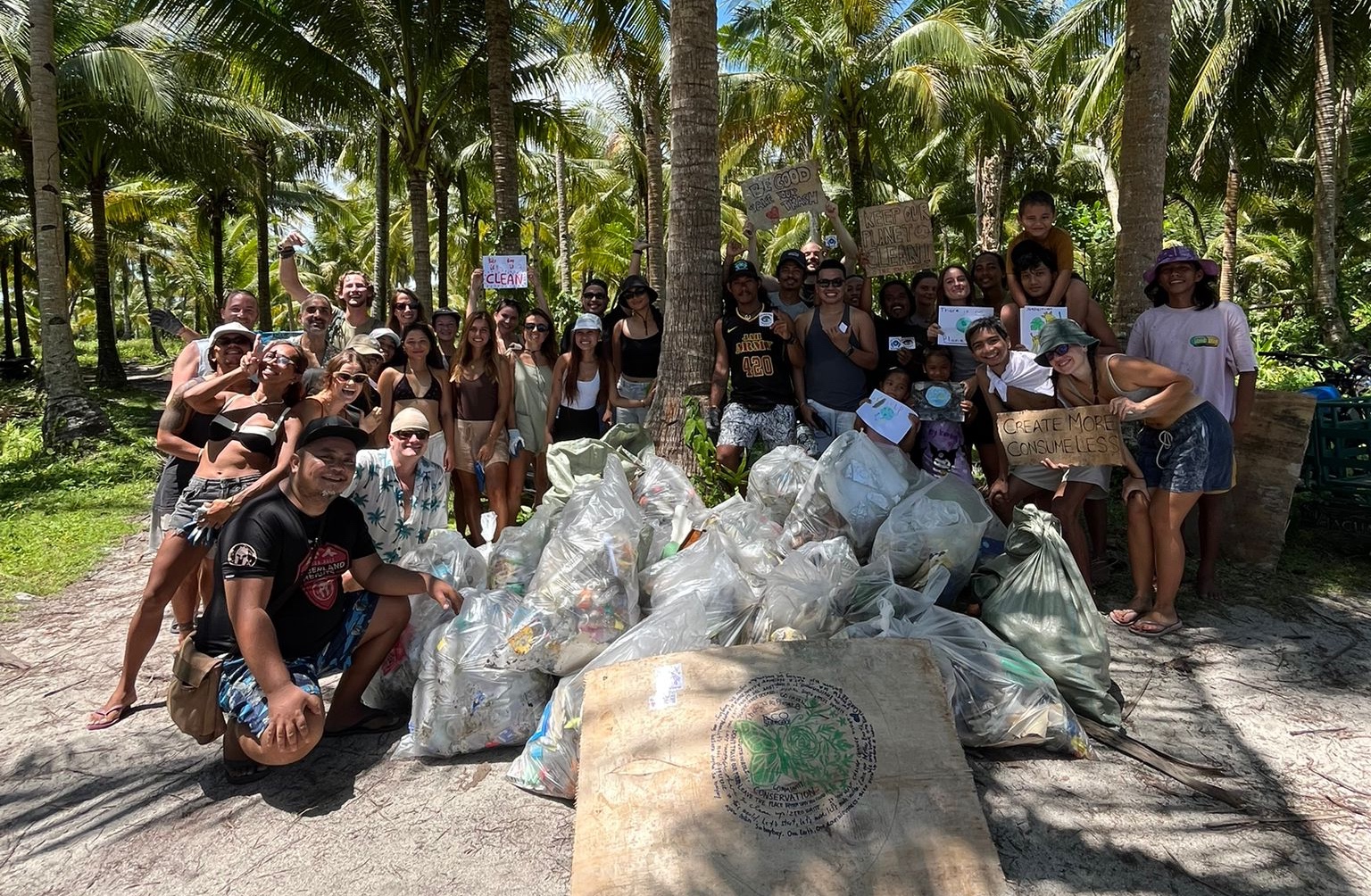
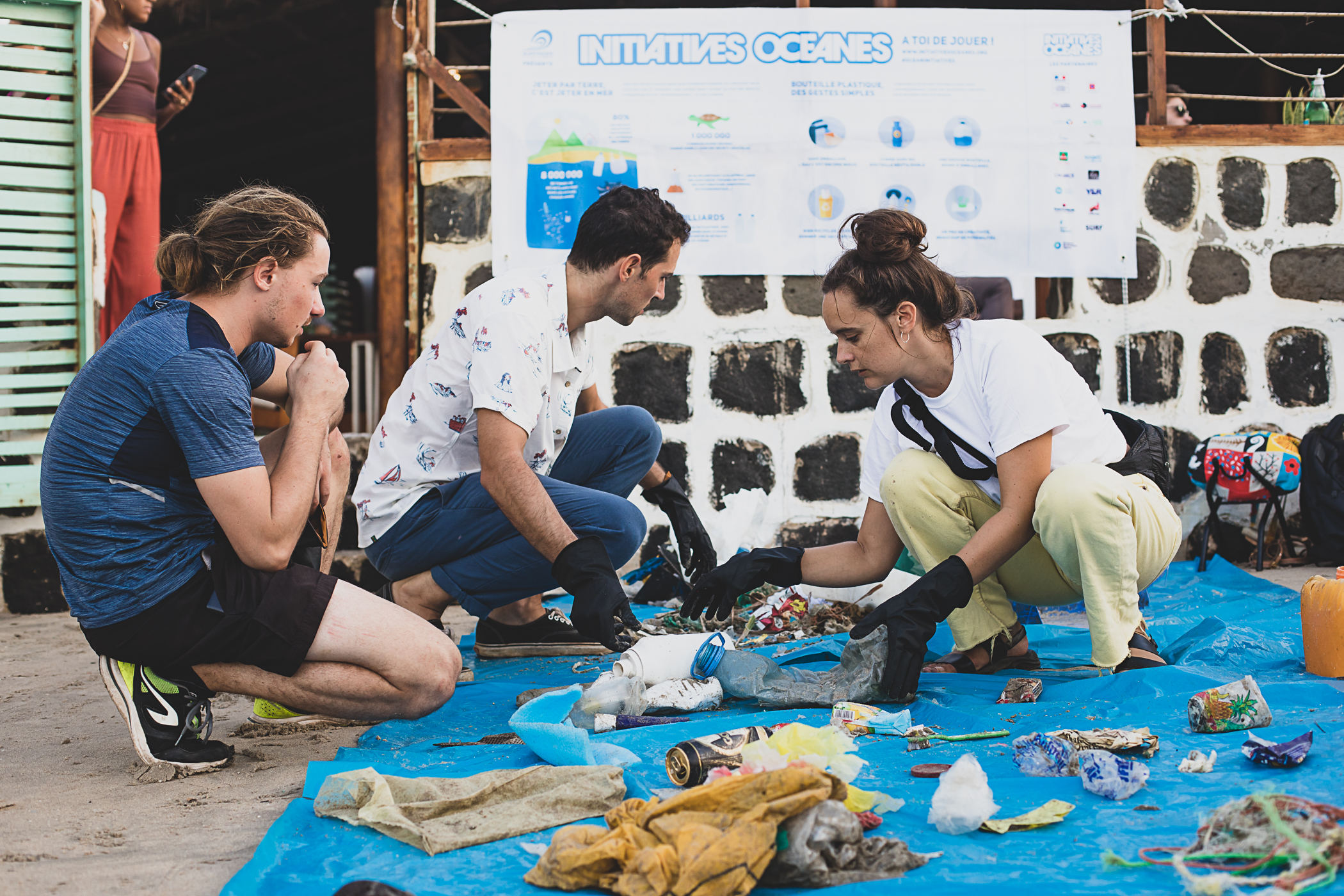
Waves & Love is a booking platform for surf trips that connects travellers with local NGOs. Travellers choose their stay, join the NGO's activities for 2 to 10 hours, and at least 8% of the price of their stay goes to that NGO. We currently work in Lobitos, Peru, and Siargao, in the Philippines.
Thomas: In what ways can we make sure Intelligent Activism is part of Waves & Love?
“Waves & Love is an example of intelligent activism in a way, because you're using what's there in front of you to multiply that effect.”
— Chris Hines
Chris: People are going there, and you're using tourist destinations and booking platforms to link up to people. Putting the two together: that is the intelligence in there.
The next level is the skills of the people who are coming. If I went to Dakar, my skill isn't to help with the scientific tests. It would be to run a fundraising workshop, give a talk and pass on everything I know. So it's almost asking for my CV and matching it to those organisations. And in places that don't have the infrastructure we take for granted, helping to grow food, build irrigation or do some hard physical work is a good thing too.
I remember surfing Imsouane, in Morocco, around 1983. On a crowded day, there were ten of us in the water. Today there are hundreds. It was a tiny fishing village with no toilets, and what we should have done was dig a pit latrine. That would have been an intelligent form of activism. Go surfing when it's glassy, make the pit latrine for the day. Have another surf, glass off, eat food, wake up, repeat.
In Lobitos, this already exists: our partner El Rancho Lobitos welcomes travellers on its dry toilet and composting projects.
Thomas: That's why we recommend a call between the NGO and each traveller before the stay, to see what skills they can bring.
Chris: That's really important. In the first ten years of SAS, we always put our hand up and asked for help. Engineers contacted us. A local GP and scientists from the University of Leicester tested our blood, and found antibodies to a sewage-related virus in 93% of us, compared to 22% of the general population. That was the equivalent of one of your travellers coming through and saying: I can do this. Among your travellers, there'll be brilliant scientists and engineers too.
What are the risks for a platform like Waves & Love?
Thomas: What blind spots do you see? What obstacles could a project like ours run into?
Chris: There'll be naysayers. It's easy to be one, and I have that internal voice myself. So block it out and say: this is a good idea, this is a good mission. You've worked, you've studied, you've done the hard graft your whole life, so don't let that be a block.
The other risk is how robust the NGOs are. You don't want to put too much of a workload on them: suddenly they might have 30 volunteers arriving.
I used to know people at WaterAid. On a very different scale, they put in a water pump that brought clean water for the first time. But it upset the people who were selling water in plastic bags, and they broke the pump. WaterAid learned to bring those people into the conversation, so they didn't feel their livelihood had been taken away. So good, detailed feedback forms from both sides on how it worked will be really good.
Thomas: That's in our plans: a two-way review system, so NGOs can review travellers and travellers can review NGOs.
Chris: Absolutely. I also like that people choose how much they want to give. And the storytelling will be really important for you: what did the previous person do? Word of mouth will be really powerful.
Travellers give at least 8% of the price of their stay to the NGO, and can choose to give up to 30%.
How can travellers tell real impact from greenwashing?
Thomas: If you were a traveller, what would make you trust Waves & Love, and not suspect greenwashing?
Chris: I've talked with you about the work you've done through your life, and that gives me a surety that this isn't a whole level of greenwash. It's often hard to say who you are, but it's a really important piece to have there: people need to trust that you are who you say you are, and that you've done this kind of work in other countries. This isn't just some chancer coming in and going: I've got a good idea, I'm throwing some money at that.
There's even a European directive on greenwashing, and I would encourage Waves & Love to look into it.
Directive (EU) 2024/825 applies from 27 September 2026. It bans vague claims like “eco-friendly” without proof, and claims of neutral or reduced impact based on carbon offsetting. We are reviewing our own wording against it. Thomas's story is on our About page.
Where does voluntourism begin?
Thomas: Where is the line between genuinely helping and voluntourism? Our biggest fear is travellers doing an activity with kids, taking a few photos for Instagram and going home without understanding the project.
Chris: That is a tough one. Part of the answer is to talk about it, to almost pre-call it out and say: if this is you, don't go. This isn't for you.
One of my nephews fell foul of this. He raised money packing bags at a supermarket checkout, then it was two thousand pounds to go to a country and do a little bit of work, but not much. The company running it was doing this in dozens of schools around the UK, and they were the ones making the real money. They were virtually holidays. It was an industry in its own right. So a bit of education about what that is would be really powerful.
“It's better that people give one hour and it counts and makes a difference. It's not about your self-promotion.”
— Chris Hines
Chris: If you're just after Instagram likes, you can probably create a picture of yourself wherever you want to be. But it's exploitative, and we need a world where we're not exploitative and extractive.
Of course people will want to share a couple of pictures, because they're proud of what they did. But make sure the message is genuine. Check that you have the permission of the people in the photograph. And if you post a picture on Instagram, it must reference back to that NGO, that charity. That should be the primary purpose of the photo. You could even send travellers a little guide when they book.
Chris Hines' 4 rules for posting about an NGO
Ask yourself why you are posting.
Get permission from the people in the photo.
Tag the NGO first, not yourself.
Give back through your post: credit the NGO and add a link to donate.
These rules are going into the guidelines that every Waves & Love traveller signs before their stay.
Can surf travel justify the flight?
Thomas: We are still a travel agency: Waves & Love means people flying across the world to surf. How should we deal with that contradiction?
Chris: When the editors of the Rough Guide and Lonely Planet were asked that, probably 20 years ago, their answer was: travel less, stay longer. So travel like that, and make it count. Giving something back is an important part of that.
Then, wherever you book a flight, there's usually an option to go for a more sustainable one: click on it. And underneath that, you can offset some of your footprint, after trying to reduce it. But it needs to be a proper Gold Standard accredited offset.
Above all, the idea that we can all have four, five, six foreign holidays a year: if you're going to do that, compress it into two or one. Think how lucky we are.
In 2007, Rough Guides even printed “Fly less, stay longer” as a health warning in its guidebooks. Gold Standard is a carbon credit standard founded in 2003 by WWF and other NGOs.
Thomas: A French surfer I met recently offered to travel from France to Dakar by train and boat, and document it, to show people it's possible.
Chris: That's slow tourism. In a world that moves at such a pace, moving slowly is really good. The first time I went to Morocco, we took the ferry to Santander and drove all the way down in a very old van, at 32 miles an hour. And the more people demand it, the easier it becomes.
Thomas: That's activism right there.
Chris: Yeah, that is activism. We can change those transport systems.
What is the one change every travelling surfer can make?
Thomas: Is there one simple thing any surfer can do today to travel more responsibly?
Chris: And also, just stop and look around. We live in a pretty divided world. So there's that word, love, but respect as well, for other travelling surfers, for people with different abilities. Just being a bit more grounded and slow. And sharing: there are eight billion of us on the planet. We've got to share a lot more than we do. It's not all about me.
What's next for Chris Hines?
Thomas: What are you working on over the next six months, and how can our community help?
Chris: I'm 64, and I'm aware that I won't be around forever. I was lucky enough to be part of the story that helped make positive change happen, so I'm taking some time to tell it, maybe as a book. That's my winter project. The way people can help is just to keep that spirit going: the idea that we can all make a difference.
Chris then borrowed a line from the writer Alice Walker, who said her activism “pays the rent on being alive and being here on the planet”.
Chris: Well, let's do intelligent activism, and that's our little rent for going in the sea and the ocean.
If the story becomes a book, Chris would like to see a copy in the hotels and NGOs our travellers visit. So would we.
“Sometimes I struggle with the massive challenges of the world. But we have to have that kind of spirit, and there has to be a bit of fun in it, and love.”
— Chris Hines
His last words before we hung up: “Keep going.” We will.
What we're changing after this conversation
Photo rules: Chris's four rules are going into the guidelines every traveller signs before their stay.
Two-way reviews: NGOs will be able to review travellers, and travellers will be able to review NGOs.
Skills first: we keep recommending a call between the NGO and each traveller before the stay, to match skills with real needs.
Slow travel: we are exploring ways to reach our destinations without flying, starting with France to Dakar by land and sea.
Three surf films Chris recommends
Before we hung up, Chris pointed us to surfers and filmmakers whose work he admires. Three films to start with:
Hireth, a Finisterre film by Seth Hughes with surfer Mike Lay, about our deep connection to home shores. Hireth is a Cornish word for homesickness.
The Cigarette Surfboard, directed by Ben Judkins: surfer Taylor Lane builds a working surfboard from 10,000 cigarette butts collected on California beaches. “It's a great film,” says Chris.
The Big Sea, by Demi Taylor, Lewis Arnold and Chris Nelson, about the hidden cost of the neoprene in our wetsuits.
Read more
Read episode 2 of our Q&A series with Belinda Baggs, longboard champion and co-founder of Surfers for Climate.
Get the next Q&A in your inbox: subscribe to our newsletter.
Find a stay that gives back in Lobitos or Siargao.
Travel with Waves & Love
Support the local projects featured in this story through our responsible surf missions.
Missions


Surf. Connect. Give back.
Join the Waves & Love community for surf spots, NGO missions, and early access to new destinations.
By continuing, you agree to receive our emails. No spam, unsubscribe anytime. See T&Cs